Detailed receipt
The detailed receipt shows how the fare was arrived at: the tariff, what the distance cost, what the time cost, every extra, any tip or discount, and the tax. Passengers who have to expense a ride usually need this one.
Switch to it with the button at the bottom left of the receipt screen, and the app keeps using it until you switch back. It is longer than one screen, so it is shown here in three parts.
Head of the receipt
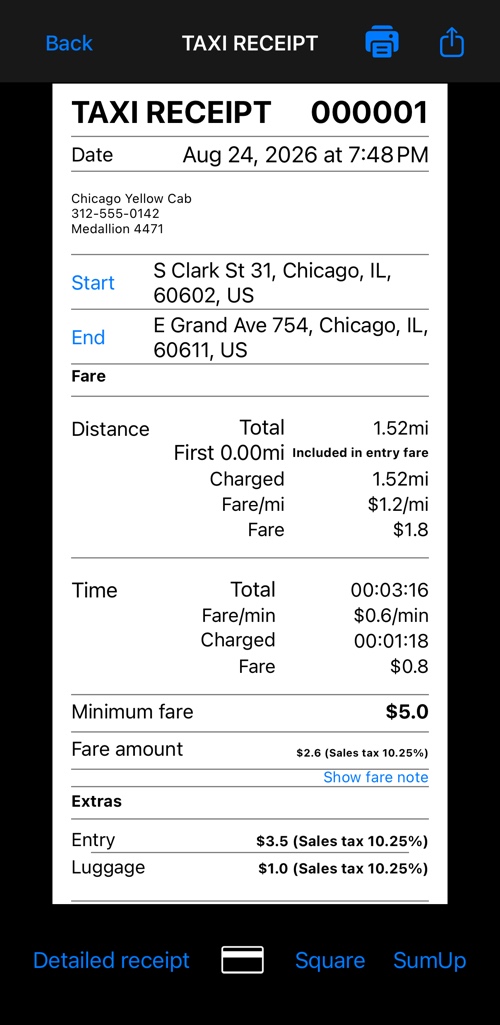
The top is the same as on the simple receipt — header, receipt number and date, company block, pickup and destination — and then the fare section begins, naming the tariff the trip ran on.
The fare, extras and the running total
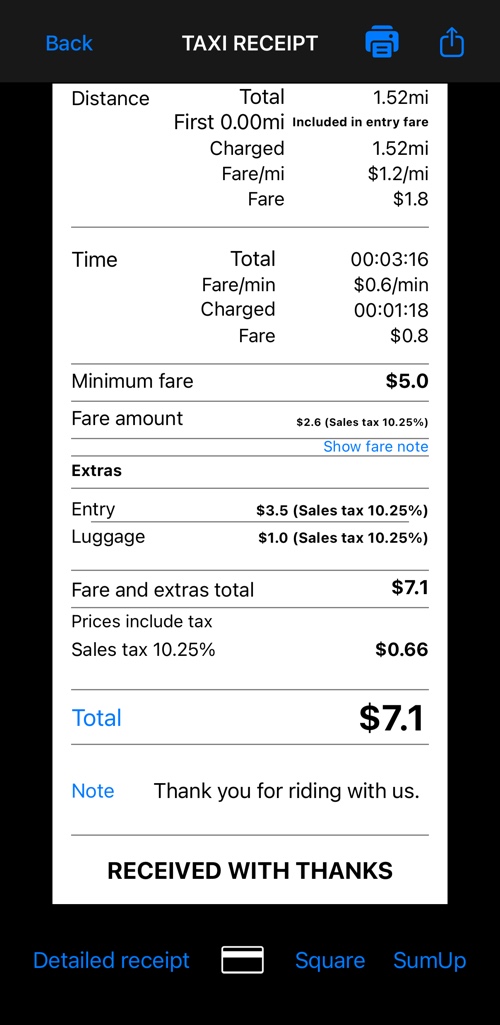
- Distance — the total distance, how much of it was already covered by the entry fare, what was actually charged, the rate per kilometre or mile, and the resulting amount.
- Time — the same for time: total, charged, rate, amount. The meter charges by time whenever the car is below the fare’s speed threshold, so this line covers waiting in traffic as well as standing still.
- Minimum fare — shown when the trip did not run far enough to pass it, so the passenger can see why the amount is what it is.
- Fare amount — the metered fare, with the tax rate that applies to it if you have one set up. Show fare note expands a plain-language sentence explaining how the fare was worked out.
- Extras — the entry fare and every extra you charged, each with its own tax. A discount is an extra with a negative amount and appears here too.
- Fare and extras total.
Tip, tax and the amount due
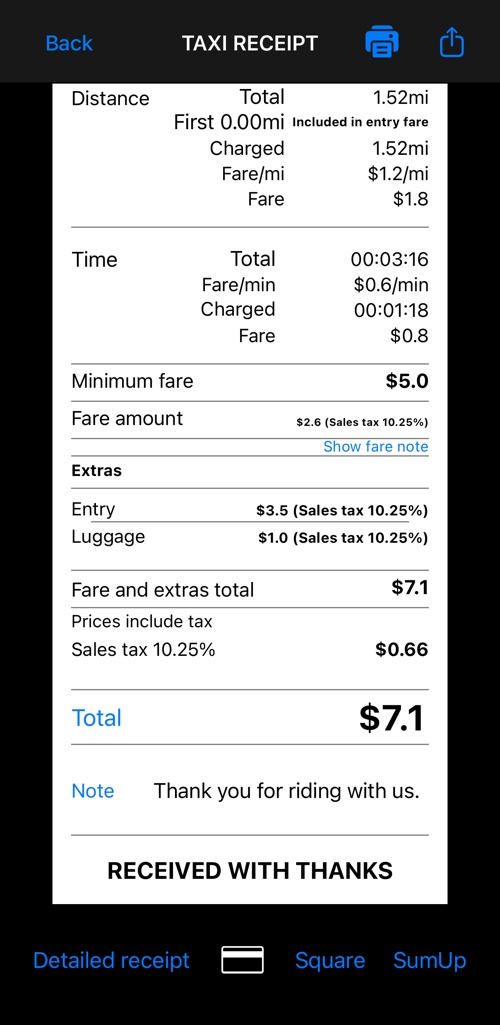
- Tip or discount — the difference between the metered amount and the total you set with the Total button. Which of the two words appears depends on the sign, and you can rename both in advanced settings if your business calls them something else. More in adjusting the trip total .
- Tax — one row per tax rate in play. Whether tax is treated as already inside the prices or added on top of them is a setting; the sales tax page goes through it properly.
- Total — the amount due, and the button that adjusts it.
- Note — the same note field as on the simple receipt.
Print and share work exactly as they do on the simple receipt: a Bluetooth printer through the printer button , or a PNG or PDF through the share button.
On Android
The detailed receipt carries the same sections. The difference is how you get to it: the bottom-left button is a toggle that flips between simple and detailed, rather than opening a list of receipt types.
More about receipts:
Simple receipt ▪︎ Printing ▪︎ Advanced settings ▪︎ Sales tax ▪︎ Adjust total